

(Unfortunately, the introductory video has some areas where sound did not come through. Scroll down to see a summary of what the video is about.)
Introduction
One of my purposes in coming to Russia was to see what interest there is in meditation practice. Of course, the vast majority of people do not practice meditation of any kind, despite it being available through different traditions. I discussed this in my article, “Why Sit”.
https://bumblebuddhist.com/why-sit/
Visiting Moscow’s Zen Community
Before my arrival, I asked two of my friends, Nellie in Volgograd, and Tanya in Yalta, to see if they could set up a workshop or two. When I arrived in Moscow in early May, I stayed with my friend Yulia, a Zen student.
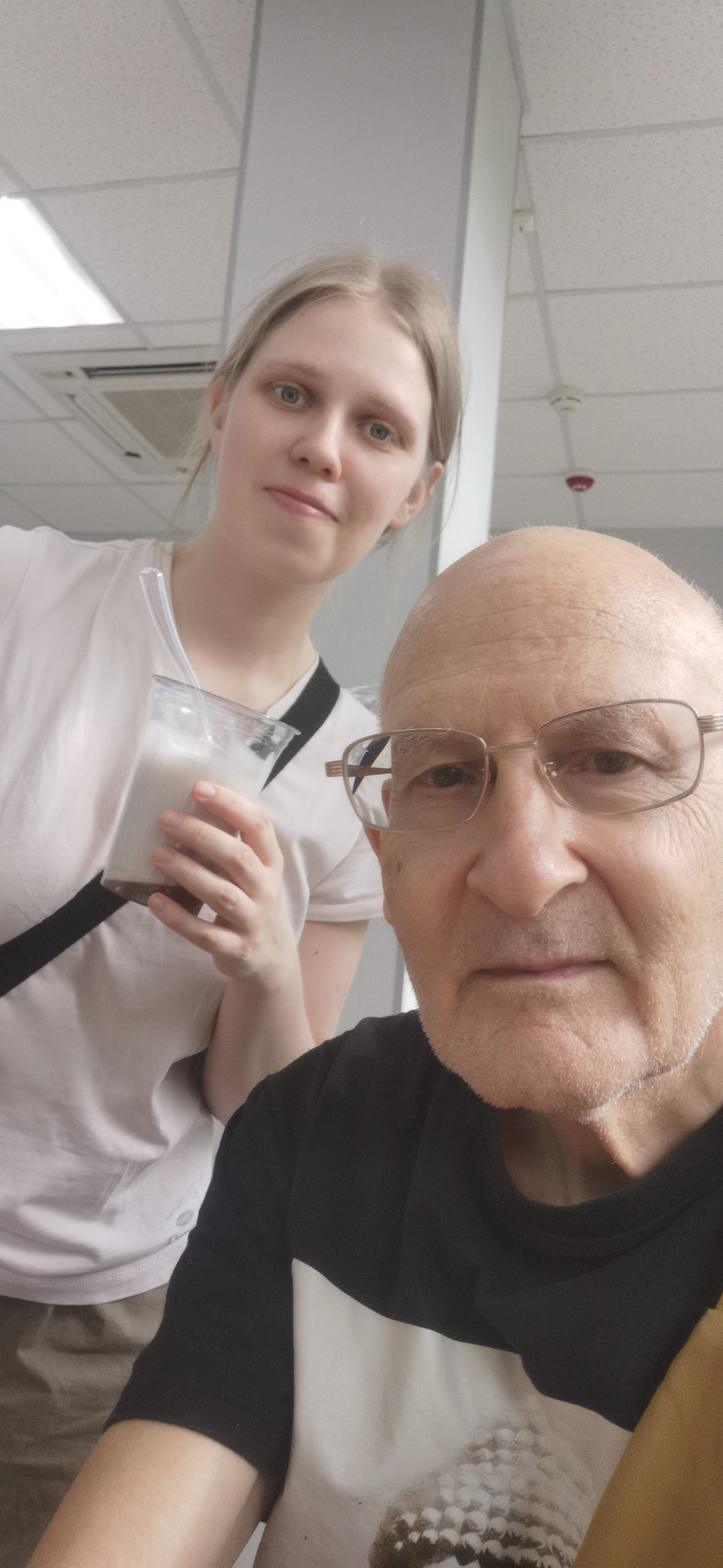
While I have been sitting with my American friends online, and with Thai friends, along with Joao Sensei, a Zen teacher based in France, I was happy to do Zazen with Russians in Moscow. They rent a space where they hold a weekly meeting of meditation, a talk by the teacher, and discussion. More on that later on my return visit to Moscow.
What was funny was when they did a traditional chant, known as the Heart Sutra, which is chanted in all Zen temples as well as other schools of Buddhism, both Tibetan, Chinese, Japanese, Vietnamese, etc. Since they were chanting in the traditional Japanese version, I was given a sheet with the words written in Cyrillic, Russian script, and asked if I can read “Russian”. Well, I can read—slowly—however, I know the Heart Sutra by heart….so it was easy to do…we all got a smile from that….”Kan Ji Zai Bo Satsu Gyo Jin Hanya Haramita….”
On to Volgograd
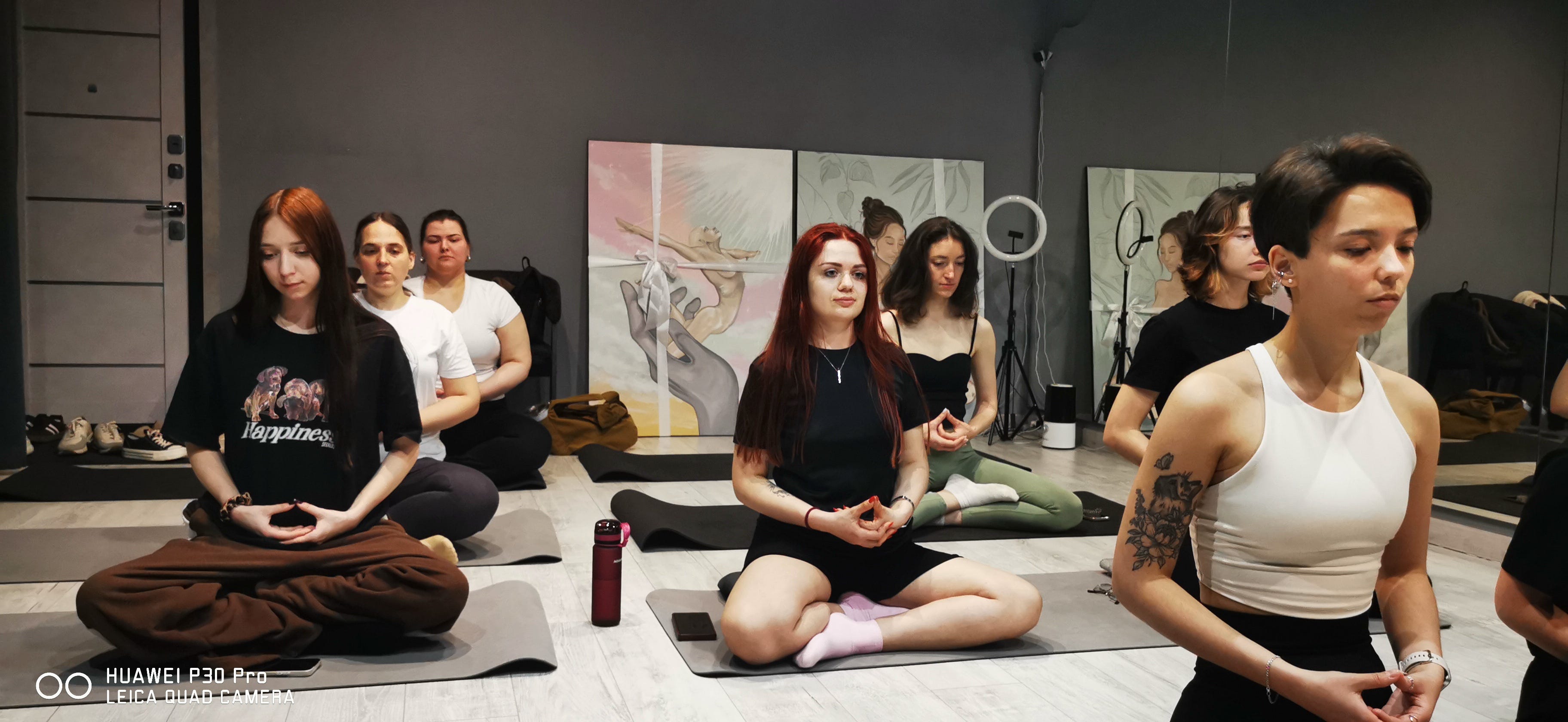
My friend Nellie is an English teacher, along with our mutual friend Irina, also an English teacher. Nellie is also a yoga student, however, Irina is not. Nellie found a yoga studio and asked if people would be interested in a Zen meditation workshop. About 10 people showed up, 20 year old female yoga students.
I went through the routine I go through, which is some preliminary warm ups and stretches, to make crosslegged sitting easier. We then did a 15 minute period, a short break and a 10 minute period, followed by a lively question and answer. The next day, Nellie, Irina and Kseniya, and I met for a walk, coffee and follow up discussion.
My other Russian friends aren’t so interested in meditation practice, as is true with most people everywhere, but that’s ok. It’s not for everyone.
Visiting My Dear Friends, Regis and Tanya, in Yalta, Crimea
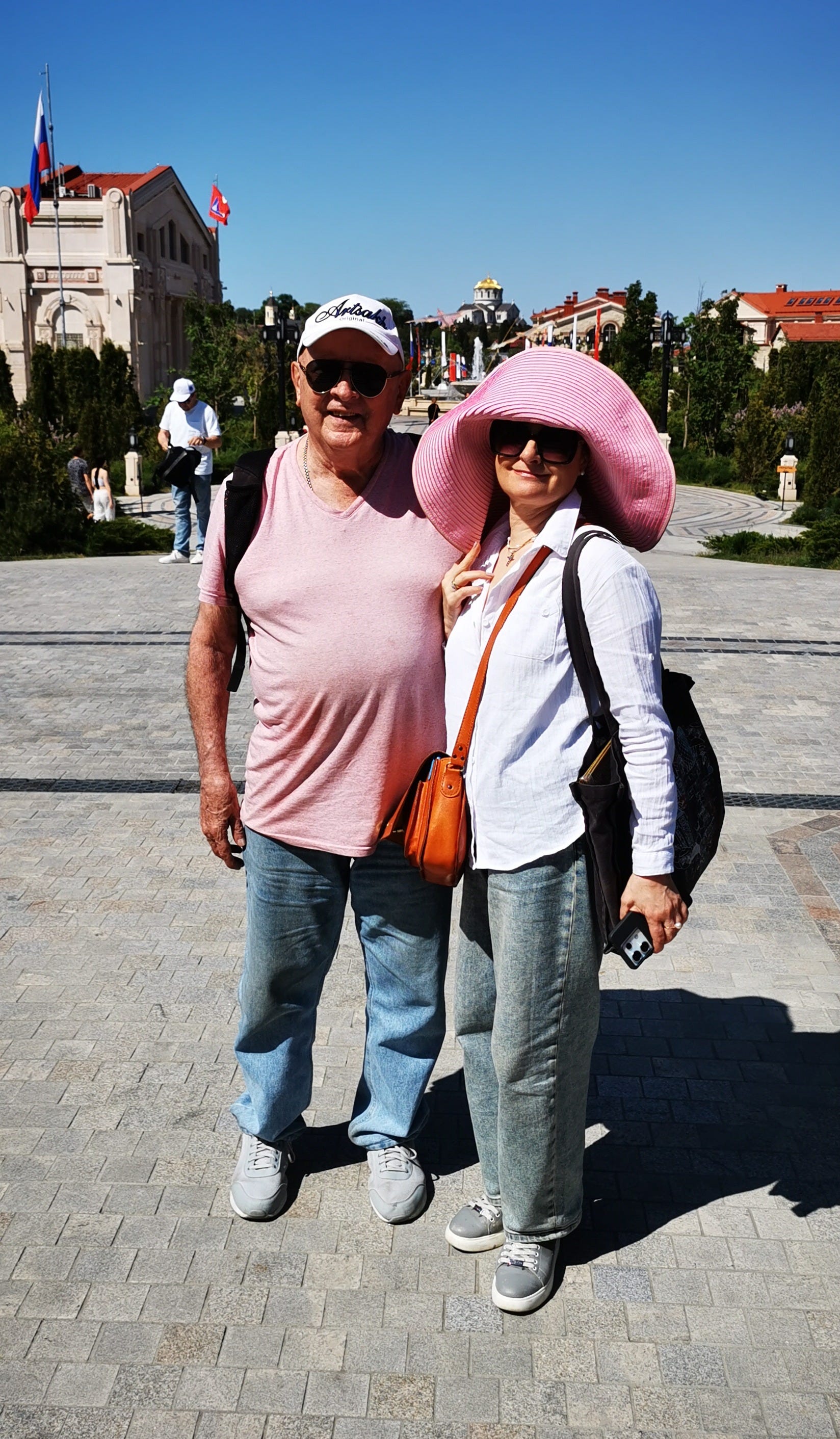
Regis is unique in that he got a full scholarship to study in the Vatican as a Catholic priest, while I was practicing Zen as a monk in the USA. So both of us have a connection as 'spiritual brothers’.
A Visit to a Home for Handicapped People
Tanya introduced me to a lady who administers a home for people with some physical and mental disabilities. I walked them through a Zen workshop. Regis created a video to show how it went.
Next, Tanya set up another workshop with some of her friends. I explained the process of meditation practice. We followed up with a discussion. These are not necessarily yoga students (though some are) but all very thoughtful intelligent people. That video is the full event. So I have posted a summary of how it went below.
Here is a summary of the workshop (With assistance from Deepseek AI)
Introduction & Participants
The session is led by Eric, a Zen practitioner.
Participants include a mix of people, many of whom are tango dancers (Nadezhda, Yuri, Ruslan, Yelena).
Others present are Maria, Vanda (who practices meditation and is in a 12-step program), and Elena Alexander (the host).
Eric explains that he practices Yoga, which to complement his Zen practice (body vs. mind).
Core Zen Teachings & Meditation Practice
Eric emphasizes that the core of Zen is meditation, which helps cultivate consciousness, self-awareness, and compassion.
The goal is to face reality as it is, not as we wish it to be.
Meditation is described as “internal house cleaning” – calming the mind, observing thoughts without judgment, and returning to the breath.
Eric explains the breathing technique: count each exhalation (1 to 10), and when thoughts arise, simply return to the breath.
Eyes remain open in Zen, gazing softly about one meter ahead.
Walking Meditation & Stretching
The group does light stretching to prepare for sitting.
They then practice sitting meditation for 10 minutes.
After sitting, they do a walking meditation, coordinating steps with breathing.
Discussion & Q&A Highlights
Meditation vs. World Problems
A participant asks: How can we meditate peacefully when there is so much suffering and war in the world?
Eric responds that we must face painful feelings directly, not avoid them. Avoidance leads to addiction or blaming others. Facing pain with awareness helps prevent hatred and further suffering.
He shares personal stories of loss and uses examples of Jesus and a Buddhist monk who endured violence without hatred.
The Effect of Meditation on Society
Eric mentions a story (unverified) that crime rates dropped in a city when many people meditated.
He explains that when individuals calm their minds and cultivate empathy, it positively affects others around them.
Monastic Life: Weakness or Strength?
A participant questions whether monks are weak (escaping life) or strong (facing it).
Eric says both can coexist – it takes courage to face one’s own pain and truth.
A Russian participant adds that in Russia, many monks enter monasteries out of deep faith and a desire to serve God and people, not to escape.
Vegetarianism / Eating Meat
Eric is asked if he eats meat.
He explains that he avoided meat for many years but now eats chicken and fish due to health reasons.
He avoids mammalian meat because he once witnessed a mother cow protect her newborn and felt deep empathy.
He emphasizes gratitude for food and awareness of the suffering involved.
God / Higher Power in Zen
A participant asks if Zen connects to God or if it’s purely individual.
Eric says Zen does not focus on whether God exists externally; it focuses on direct experience and inner reality.
He quotes Jesus: “The kingdom of heaven is within you.”
A Russian participant gently reminds that for many Russians, faith in God is central and deeply meaningful – and that this perspective should be respected, not debated.
Internal vs. External Reality
A participant notes that while “everything is inside,” we also influence each other externally.
Eric agrees, acknowledging that inner and outer realities are interconnected.
Closing Takeaways
Meditation is a practical tool for calming the mind, reducing anxiety (e.g., lowering blood pressure), and healing trauma.
The practice is not selfish; it benefits everyone by cultivating empathy and reducing harmful reactions.
There is no single “right” path – whether through Zen, Christianity, or other traditions – the key is sincere practice and compassion.
Talking about “What Is Meditation?”
Regis and I spent an afternoon at the iconic Livadia Palace, summer home to the Russian Tsars, and site of the historic Yalta Conference of 1945, where President Roosevelt, Prime Minister Winston Churchill and Joseph Stalin met to discuss post war Europe and the world order.
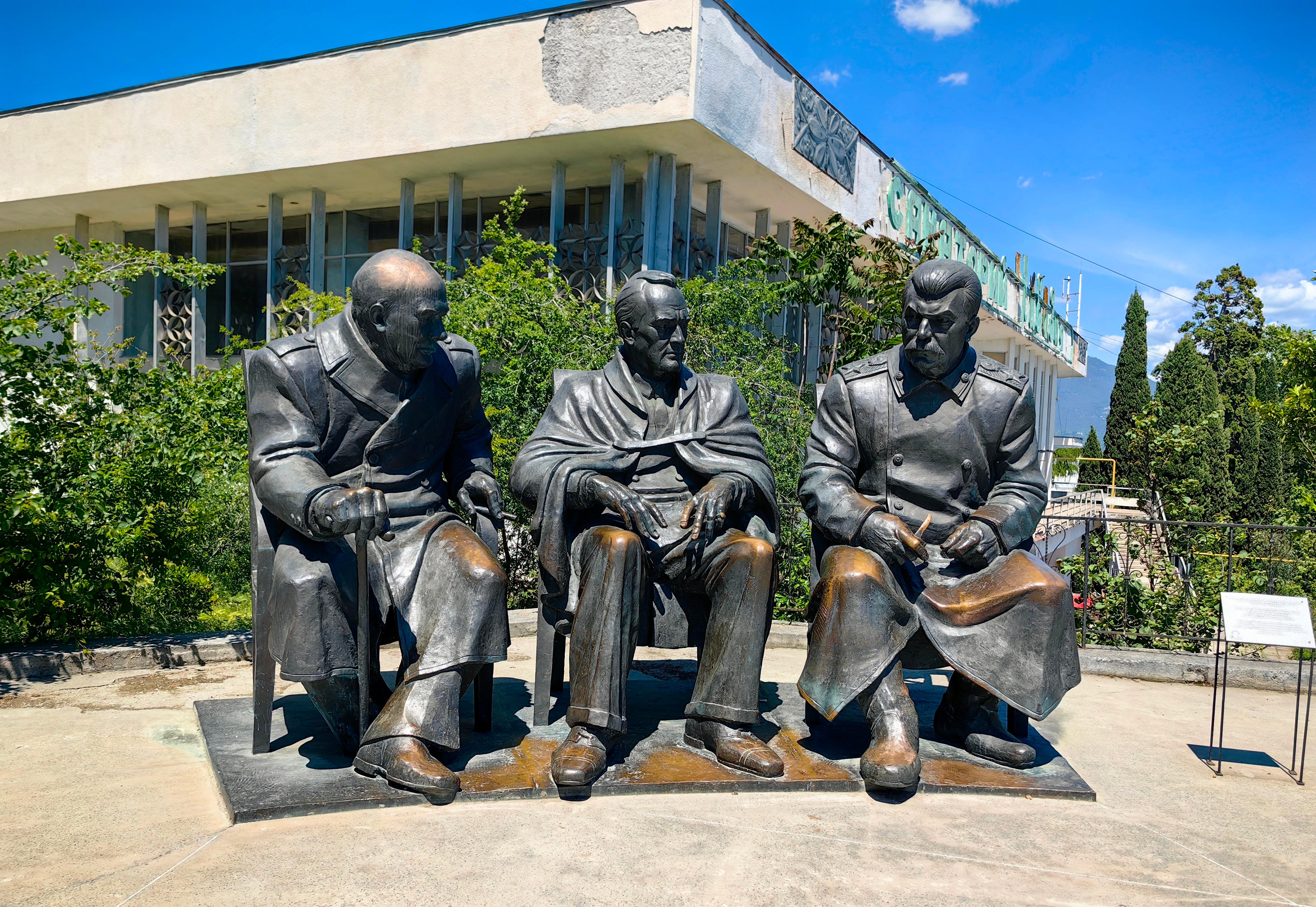
While relaxing on one of the park benches, Regis had some very insightful observations about his form of meditation (which is indeed widespread) as well as ‘why not just sit?'
Meeting Nadezhda at Mriya “Dream”
Tanya and I were given free day passes to the exclusive resort and park, Mriya, which translates as ‘Dream’ in Ukrainian language. And it is a dreamlike experience, with both an amusement park for kids as well as adult activities such as a Japanese garden, a Japanese tea ceremony (I’d practiced tea ceremony years earlier, so the tea master, a Russian lady who’d studied tea ceremony for years in Japan) and I had a wonderful conversation about The Way of Tea, Tea Ceremony as meditation practice in motion.
It turns out that Mriya also has a “Zendo”, that is, a Zen meditation hall. We simply had to go there to see what it’s about. Sure enough, there is a ‘Tan’, the meditation platform at the right, where Zen meditators sit. There was a pile of ‘Zabutons’, the large square mats to sit on along with ‘Zafus’, meditation cushions to sit on.
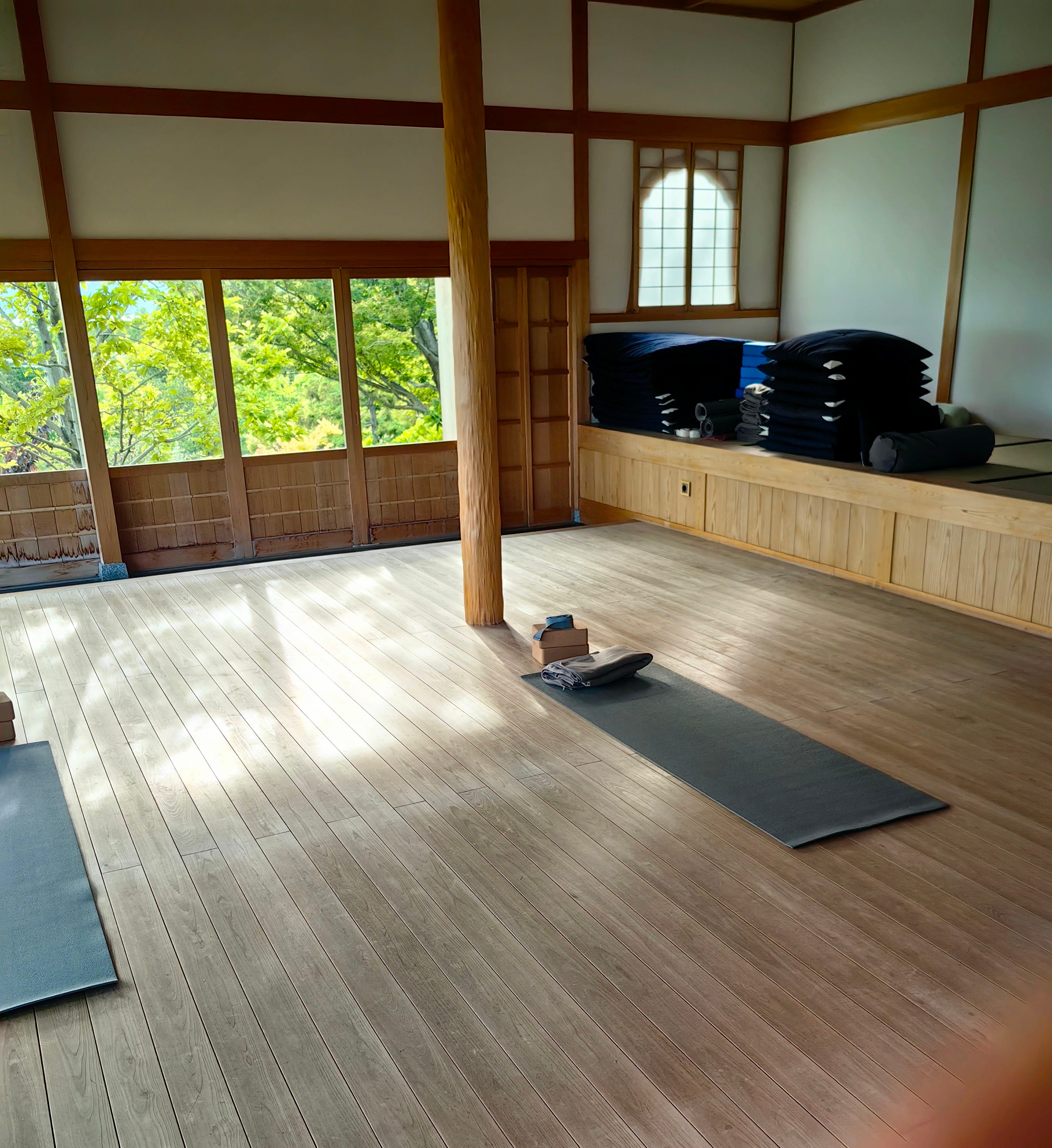
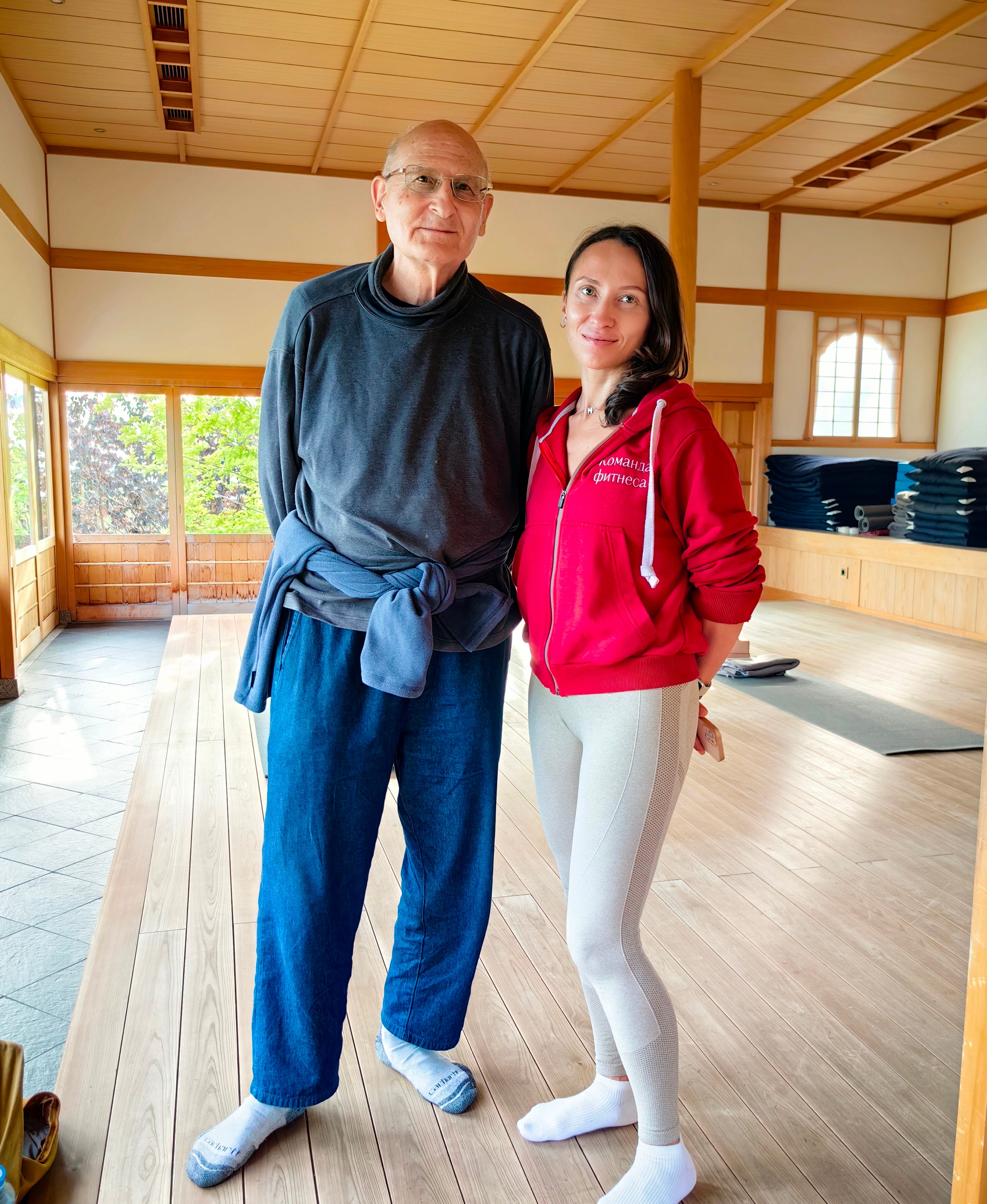
Tanya and I were met by a yoga teacher, since the Zendo also is used as a yoga studio.
In addition to teaching yoga, Nadezhda, also has practiced Vipassana, or Insight Meditation, which is very popular both in Southeast Asia and has now spread to centers all over the world, including Russia. Goenka, the Indian, who trained in Myanmar under the teacher U Ba Khin, opened centers in Asia as well as Europe, the USA and now in Russia.
Nadezhda asked excellent questions, and the next day, we met again while Regis and Tanya were at a wine tasting. We talked for another 1 1/2 hours. There is a lot of interest in Russia, at least a certain segment of the Russian population, in meditation practice, and she said that if I returned, it would probably result in an ongoing meditation group.
Returning to Moscow
Getting back to Moscow took about 36 hours. A bus from Yalta to Simferopol, capital of Crimea, and then a day and a half train ride to Moscow. As noted in a previous post, I had to go to a bank to get a new ATM card, as well as deal with my mobile phone, and then find the home of my new hostess, Maria.
I met Maria on Couchsurfer, an app that connects travelers looking to meet and stay with regular people in countries where they travel, with people who open their home to travelers. This is true People to People cultural exchange.
Getting around Moscow with a travel bag, a shoulder bag and a back pack was not so easy, but Sabi, college student whom I asked for directions, helped me both to the bank, as well as deal with the phone issue. It turned out that he also lives not too far from Maria.
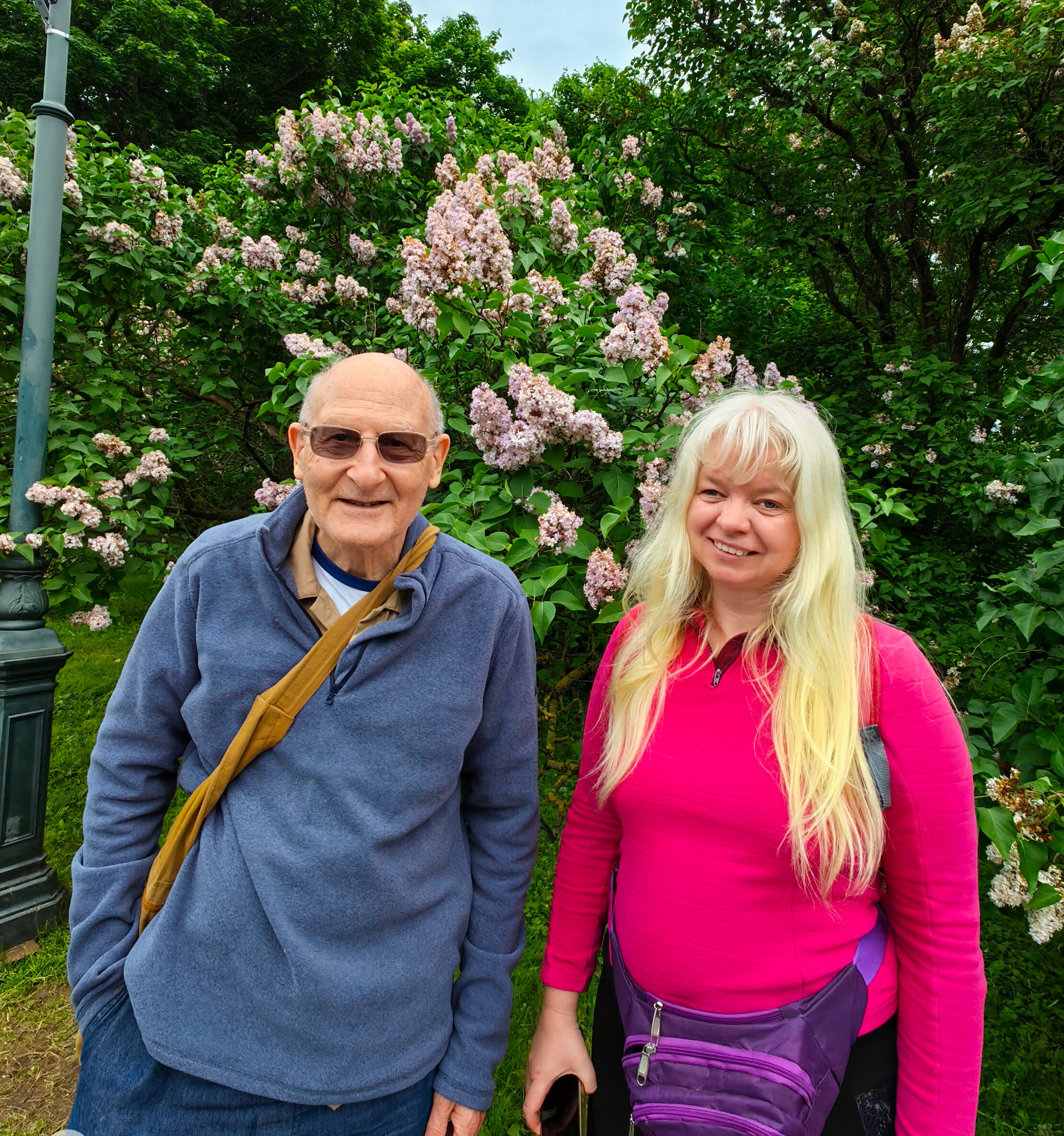
So he took me to Maria’s house, and the next afternoon, the three of us got together again for a walk and talk.
Maria Also Practices Vipassana
As Maria and I talked, I told her about my background training in Zen, and she surprised me by saying that she also has practiced Goenka Vipassana retreats. These retreats are very rigorous.
Ten days long
Complete silence with other students
About 10 hours a day of sitting meditation practice often guided with theory of mindfulness of breathing, the body and our thought processes
No contact with outside world via mobile phones, which are collected and kept until the end of the retreat
Two meals a day, with a small snack instead of dinner
Donation based. No charge, unless, at the end, one chooses to make a donation
This is one of the best things people can do who want to examine their life. I have done several of them, and recommend them to people. It does take considerable stamina, however.
Returning to the Zen Community
The plan was to stay with Maria, and then spend the final three days back with Yulia, my Zen student friend and hostess. To do that, I brought Maria to the next Zen meeting.
We did the usual routine of two periods (I think 40 minutes each) of Zazen, followed by chanting. Again, the Heart Sutra was in Sino Japanese, which I know by heart. Other chants I know of in English, but not Russian, so I just listened to those.
After the short service of chanting, the teacher, Yulia (another Yulia, not my friend) gave a talk and then invited/encouraged me to come forward and give an impromptu talk. People seemed to like it alot, and several asked to see me the next day.
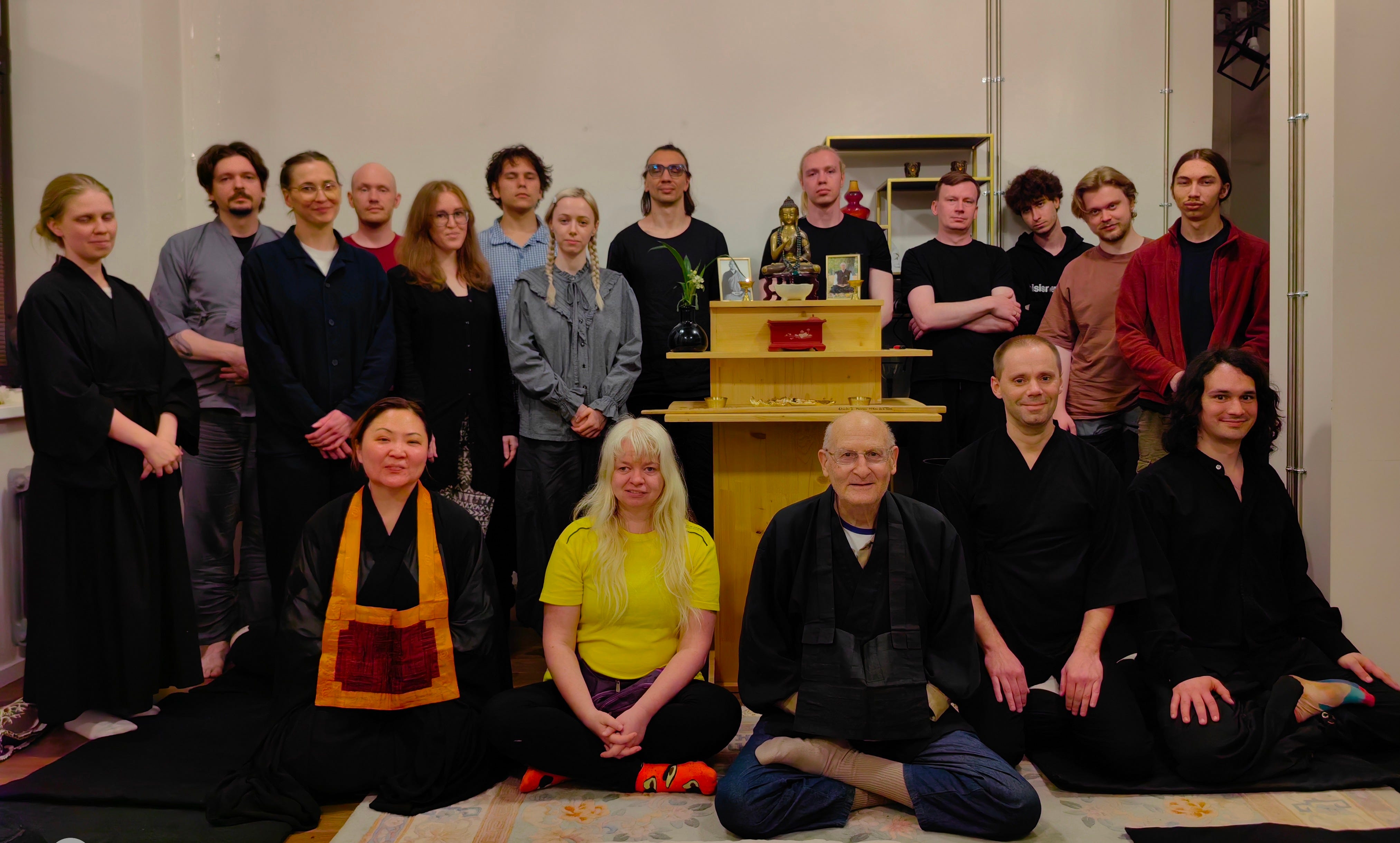
Yulia, the teacher, wears a special orange robe showing her position as the teacher.
So the next day, several of us met at a restaurant, and talked for another 3 hours. Like my friend Yulia (far left in the photo) says, “Russians like to talk about serious things”. I do too.
A Note of Caution
The teacher Yulia, and I got along great, the community is great, and I kind of miss having a regular Sangha (Community) to be with. So she invited me back to come and stay in Russia.
Buddhism is recognized as one of the 4 official religions of Russia: Russian Orthodoxy, Islam, Judaism and Buddhism. However, Zen is not the indigenous Buddhism people practise, which is Tibetan style. While both are basically Cousins, Zen is ‘different’ according to authorities. A monk from Poland had difficulties with visa. She recommended I find a Russian wife, to keep the authorities happy….which might be a good idea:)
A Sour Note Ending
The teacher Yulia wanted to see me one more time before my departure, so we set a meeting at a local coffee shop. Her friend had set up a simple camera, so as to record an interview. However, the waiter at the coffee shop said, that interviews were not allowed.
Then the manager, a rather bossy character, questioned the right to have an interview, and suggested that the police become involved. This of course seemed totally ridiculous….what? we’re plotting something? So unfortunately, we had to cut the meeting short.
That was the only negative experience I had in Russia during my month long stay. I had no problems with the authorities, either police or immigration. While there is some sensitivity over the Orthodox Church, generally, people seem to do what they want. I hear that more and more Russians are practicing both Vipassana meditation, like Maria and Nadezhda do, my new Zen friends, as well as ethnic Russians practicing the Tibetan style, just as is true in the West.
A Final Note:
Back in Thailand, I hold a Zen meeting for people who like to sit together. I meet fair number of Russians here in Thailand, as I have in Russia, who are interested in meditation practice. So it appears that, at least with a segment of Russians as well as in countries around the world, people are realize the benefits of taking time to “Calm the Mind, and Discern the Real”.
I hope this trend continues so that the bad habits of anger, hatred, greed and distraction diminish, and the good habits of kindness, compassion, wisdom increase.


